Trucks from Japan: What You Can Import and How It Works
Trucks from Japan range from 660cc kei mini trucks to cab-over commercial flatbeds to factory 4×4 pickups built for decades of hard use. We buy them all at Japanese dealer auctions and ship them to buyers all over the US, Canada, the UK, Australia, New Zealand, as well as dozens of other countries.
In this guide, we’re going to cover four truck categories: kei trucks, light commercial trucks, 4×4 pickups and off-road vehicles, and specialty conversions like fire trucks and campers. For each one, we explain what it is, who usually buys them, and which models we source most often. We’ll also show you import eligibility by country, what the buying process really looks like, and how the costs actually work.
Whether you need a working farm truck or a restored overland 4×4, the process of buying used Japanese trucks starts at auction.
What kinds of trucks can you import from Japan?
You can import nearly any truck type ever sold on the Japanese domestic market, just as long as it meets the age requirements of your destination country. The general lineup of Japanese truck imports available through JCD falls into four broad categories: kei trucks, light commercial cab-overs, 4×4 pickups and off-road vehicles, and specialty conversions.
Kei trucks and mini trucks
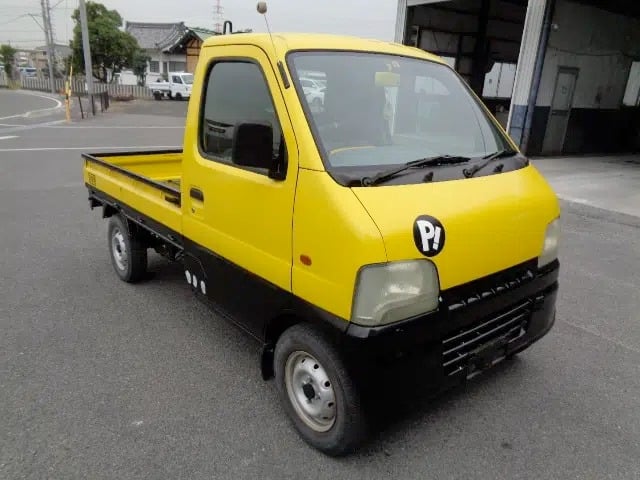
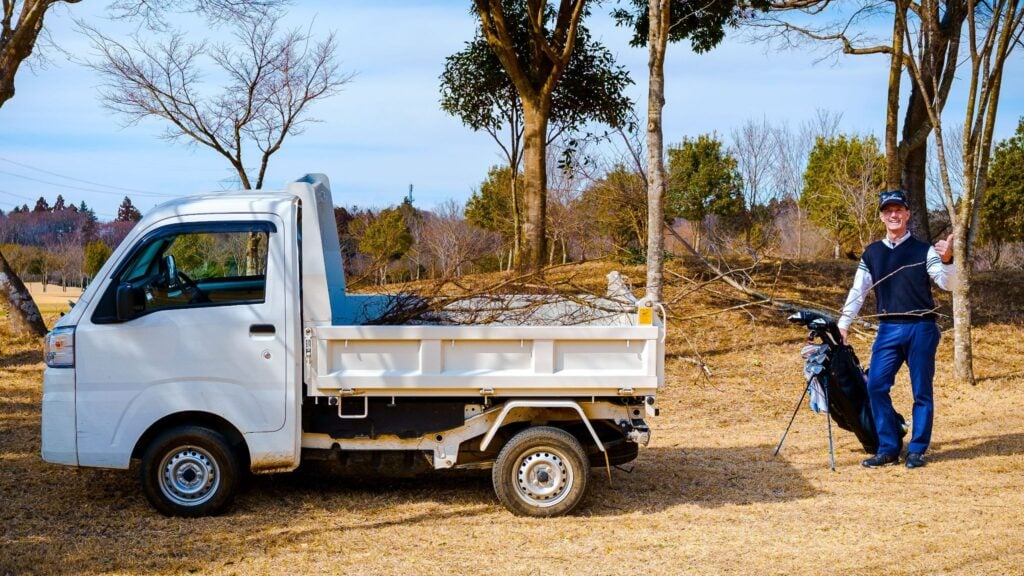
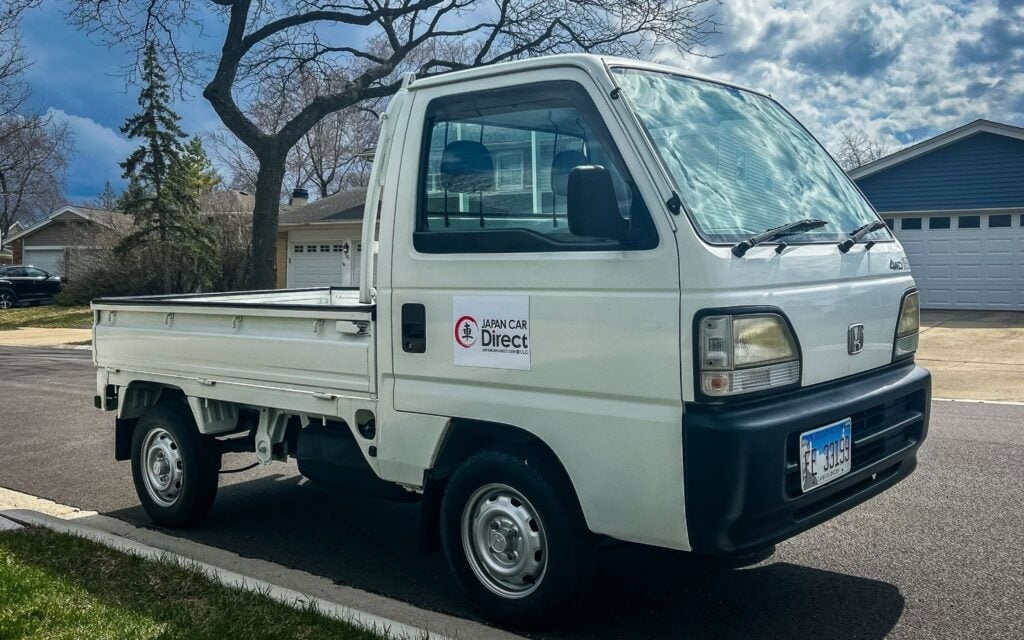
Kei trucks are Japan’s smallest commercial vehicles: 660cc engines, an overall length under 11’2″/3.4 meters, and a classification that keeps registration and insurance costs low in Japan. The four models we’re asked to source most often are the Suzuki Carry, Daihatsu Hijet (including the Hijet Jumbo extended-cab variant), Subaru Sambar, and Honda Acty.
All four are available with 4WD, they all weigh under 800kg, and they’re perfect for use on farms, vineyards, campgrounds, hunting properties, and municipal grounds. They haul feed, tools, firewood, and materials at a fraction of the fuel cost you’d spend on a full-size truck.
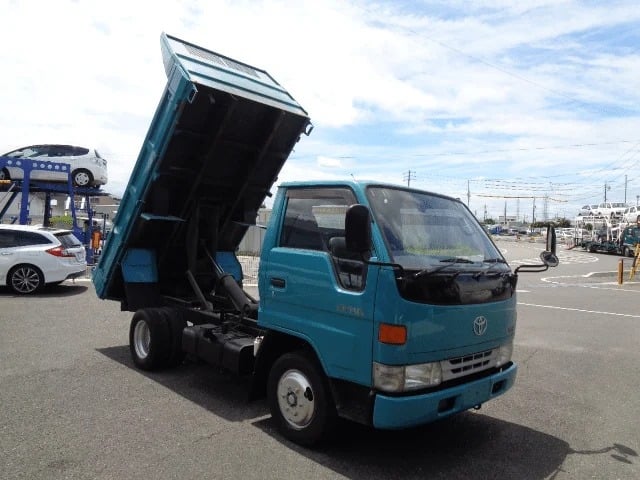
Light commercial trucks have a cab-over chassis in the 2 to 4 tonne gross vehicle weight range. Japanese manufacturers build them with a fairly wide variety of body types on the same platform. We’ve handled dump-bodied, camper-converted, and fire-service versions of these chassis. You name it, we’ve probably bid on it.
The models we regularly source include the Isuzu Elf, Toyota Dyna, Mitsubishi Canter (also sold globally as the Fuso Canter), and the Hino Dutro light-duty truck. All four are workhorses serving Japan’s logistics and construction sectors daily.
The buyers we typically see importing these trucks work in trades, landscaping, small logistics, and even island or rural operations where a full-size American commercial truck is simply too large or too expensive to run. And if you’re wondering what kind of shape a work truck from Japan might be in, the answer is, probably much better shape than you might imagine. Japanese light commercials tend to be well maintained due to Japan’s mandatory shaken inspection cycle, many with lower mileage than comparable trucks in other markets.
4×4 pickups and off-road trucks
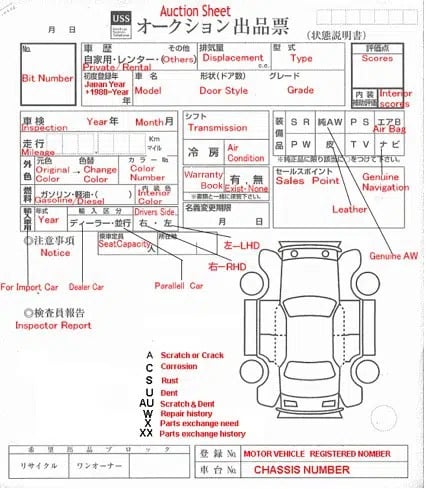
Japan has produced some of the most durable 4×4 platforms ever built, and on top of that, a large amount of domestic-market examples of Japanese pick up truck imports carry lower mileage than equivalents sold in harsher export climates. Body condition and rust are graded on the auction sheet before you bid, so you know what you are buying before you even approve your bid amount.
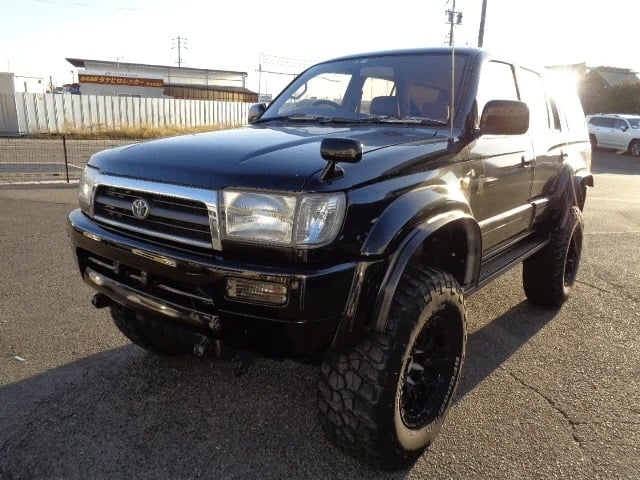
The Toyota Hilux is one of the most sought-after pickups in this category. A body-on-frame truck with a cargo bed, available in single and double cab. The Toyota Hilux Surf (known elsewhere as the 4Runner) is built with an enclosed wagon body. The Toyota Land Cruiser, including the 80 Series, 100 Series, and Prado, is a wagon and SUV platform rather than a pickup, but brings in the same overland and off-road buyers looking for proven reliability.
If you’re looking for something on the smaller side, the Suzuki Jimny offers serious 4×4 capability in a kei-class footprint.
Specialty and converted trucks
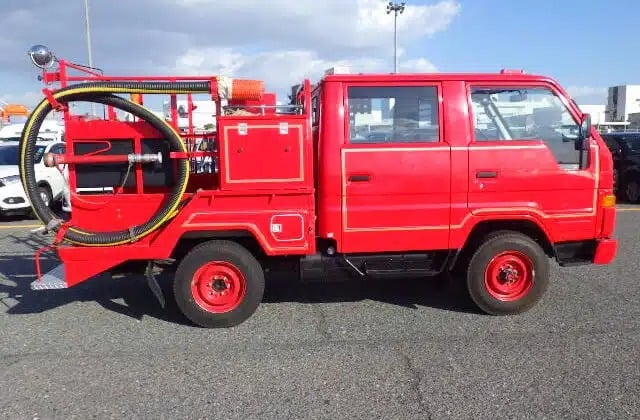
Japan’s inspection and municipal replacement cycles means a steady flow of low-hour specialty vehicles heading to the auction system on a fairly regular basis. We’ve exported fire trucks, dump trucks, and even camper conversions that would cost much more to build from scratch in most other countries.
Documented examples from our export history include used fire trucks from Japan built on Toyota Dyna, Toyota Hiace, Toyota Land Cruiser, and Subaru Sambar chassis. Dump body conversions also appear frequently on the Suzuki Carry, Subaru Sambar, and Mitsubishi Canter, including this Suzuki Carry dump truck we previously listed. For overlanders and travelers, camper and motorhome conversions on the Toyota Camroad, Isuzu Elf, and Mitsubishi Canter offer turnkey mobile living at a fraction of the price tag on a Western build.
Why buyers import trucks from Japan instead of buying locally
With Japanese truck imports you’ll get well documented condition, solid mechanical history, unique configurations, and competitive pricing that most domestic markets usually can’t match. Here’s what draws buyers to Japanese used truck auctions specifically.
Auction sheets will give you a graded, independent thorough condition report. Every vehicle sold through Japan’s dealer auctions receives a complete inspection covering interior wear, body condition, mechanical state, and recorded mileage. You can see the auction sheets and photos of all the vehicles at auction and one of our fully bilingual agents will happily translate the sheets you are interested in and can arrange a pre-bid inspection of vehicles for you too!
Japan’s shaken inspection system requires owners to maintain vehicles to a strict standard. Trucks that can’t pass are typically scrapped rather than repaired, so the vehicles that do reach auction have usually been through consistent maintenance cycles with thorough records.
Many body types and configurations sold in Japan often never reached other markets. Builds like Cab-over flatbeds, dump bodies on kei platforms, and factory camper conversions are actually common at auction, while rare or even nonexistent in North America, Europe, or Oceania. And that’s one thing that draws overseas buyers to Japanese used car auctions.
Domestic-use trucks in Japan frequently carry lower mileage than what you’d normally see in the US or elsewhere. Because Japan is a relatively small country with excellent public transport, most commercial trucks tend to run short urban routes during their entire working lifespan.
We give you access to 120+ dealer auctions every week through a single buying agent. That means you’re not limited to whatever vehicles a local dealer happens to have in stock—and you won’t be left vulnerable to the classic bait-and-switch tactics used by some exporters. No claims of “thousands of vehicles in stock” followed by a request for your deposit, only to be told the vehicle just sold and offered a supposedly “similar” replacement. With Japan Car Direct, you get direct access to a much wider selection of vehicles and a straightforward buying process from the start. We’ll search every week until the right truck shows up at auction for you!
Can you import a Japanese truck to your country?
Yes, in most markets, but import eligibility depends on the vehicle’s age and your destination country’s regulations. Below, we’ve listed the short answer on what applies in the countries we ship to most often, taken directly from our destination guides.
United States
A vehicle 25 years or older is exempt from federal transportation standards, so it imports without meeting modern safety, bumper, theft, or emission requirements. The 25-year rule is rolling and applies by date of manufacture to the month. As of mid-2026, vehicles manufactured before roughly mid-2001 qualify. See our page on importing to the United States and our breakdown of the US tariff exemption for 25-year-old vehicles for more detail.
Canada
Under the CPTPP, the normal 6.1 percent tariff drops to 0 percent for Japanese-brand vehicles with a Certificate of Origin. Mini trucks are only partially reduced, to 2.2 percent. Full details on CPTPP tariff relief for imports to Canada are on our blog. More on importing to Canada.
United Kingdom
No age ban, but vehicles 10 years or older only need an MOT. Duty is normally 10 percent, VAT is 20 percent, and a NOVA must be completed before DVLA registration. JCD also covers kei trucks in the UK on a dedicated page. More on importing to the United Kingdom.
Australia
Vehicles 25 years or older on arrival are fully exempt from RAWS and ROVER regulations. This applies in all states for RHD vehicles, and in Victoria and Western Australia for LHD vehicles too. More on importing to Australia.
New Zealand
Vehicles older than 20 years are fully exempt from emissions and safety rules. Entry certification, a compliance check, and an ESC rule apply. More on importing to New Zealand.
One important distinction for US buyers: federal import eligibility and state road registration are two separate questions. A truck can clear US customs legally under the 25-year rule but still face restrictions on road use depending on your state. This is particularly relevant for kei trucks. Read our guide to state-by-state kei truck legality before purchasing.
How to buy a truck from Japan
The process takes six steps from first contact to delivery at your port. JCD acts as your japan truck exporter and handles the entire Japan side.
Get registered and tell us the truck type you’re looking for, your budget, and your destination country.
We’ll search 120+ weekly dealer auctions and available dealer stock for vehicles matching your requirements. We have access to all major auction networks across Japan.
When a match appears, you review the translated auction sheet and photos. Request an extra third-party inspection if you want additional confirmation of condition.
Send the refundable bidding deposit (¥100,000 covers bids up to ¥1,000,000; bids above that require 10 percent of your intended maximum) and set your maximum bid. The deposit is applied to your final invoice or refunded minus transaction fees if you change your mind.
We’ll bid on your behalf. The auction system means you can win for less than your maximum bid. After winning, we handle deregistration, the export certificate, and transport to the nearest export port.
We book ocean freight on the next available vessel and send you the documentation you need to clear customs at your destination.
The whole process typically takes between two and six months from the auction to arrival to your port, depending on vessel schedules and destination. We’ll keep you up to date through every stage.
Total cost is the sum of several components, and we quote each one before you commit to a bid. Here is how used trucks japan export costs break down.
Vehicle purchase price at auction. This varies by model, condition, mileage, and current demand. Kei trucks are typically the most affordable entry point. Light commercials and 4x4s vary widely by specification.
JCD service fee. Our base fee is ¥79,000 and covers auction bidding, sheet translation, inspection coordination, port delivery, deregistration, export certificate preparation, and document shipping. On vehicles costing more than ¥1,000,000 at auction, an additional 4 percent is charged on the amount above that threshold.
Domestic transport within Japan. The vehicle travels from the auction house to the nearest export port. Distance determines cost.
Export documentation and deregistration. Included in the service fee.
Ocean freight. Charged by vehicle volume. RoRo (roll-on, roll-off) shipping is standard for driveable vehicles. Container shipping suits multiple vehicle purchases and shipping to ports that don’t have RORO service.
Marine insurance. Optional but recommended. Quoted based on declared value.
Destination-side duties, taxes, and customs brokerage. These vary by country and are paid at your end. See the eligibility section above for duty rates where available.
For a detailed look at how the costs break down or to request a personalized quote based on your truck type and destination, contact our team.
Ready to find your truck?
Tell us what you’re looking for. Register with us and include your preferred truck type and destination country. Our team will begin searching immediately across 120+ weekly Japanese auctions.
If you have questions before registering, contact our team directly. We respond within one business day.
In most countries, yes. The US allows vehicles 25 years or older. Canada allows 15 years or older. The UK has no age ban. Australia requires 25 years or older. New Zealand requires 20 years or older. Other countries vary.
Kei trucks are the lowest-cost category. The Suzuki Carry, Daihatsu Hijet, Honda Acty, and Subaru Sambar regularly sell at auction for prices well below what a used domestic truck costs in most markets. Total landed cost depends on your destination port and applicable duties.
Yes. Vehicles sold on the Japanese domestic market are right-hand drive. This applies to all truck categories covered in this guide. Some countries restrict RHD registration. Check your local regulations before purchasing.
Two to six months from auction win to arrival at your destination port. The timeline includes auction settlement, port transport, vessel booking, ocean transit, and customs processing. West Coast US ports are fastest from Japan. East Coast, European, and Oceanian ports take longer due to additional transit time.
Yes. JCD has exported fire trucks built on Toyota Dyna, Toyota Hiace, Toyota Land Cruiser, and Subaru Sambar platforms. We have also exported dump body conversions on Suzuki Carry, Subaru Sambar, and Mitsubishi Canter chassis. Age requirements for your destination country still apply.
No import license is required in the US, Canada, the UK, Australia, or New Zealand for personal imports meeting age requirements. JCD acts as your buying agent in Japan and handles all export-side paperwork. You handle customs clearance at your destination, and we guide you through it.