Other Countries
Import Information for Other Countries

Australia: Infrastructure.gov,  Australian Customs,  RAWS Australia,  RAWS SearchSEVS Register, AQIS
Cyprus: Customs & Excise
European Commission: Enterprise & Industry

Fiji: LTA
Finland: AKE, TULLI
Hong Kong: Customs & Excise
Ireland: Citizens Information
Jamaica: Jamaica CustomsTrade Board,  Import Policy
Kenya: KRA
Malaysia: MITI
Malta: ADT VCA
Mauritius: Industry & Commerce
Namibia: MTI Orbit
New Zealand: Land Transport NZMAF
Pakistan: FBR
Philippines: Bureau of Customs
Singapore: One Motoring
South Africa: ITAC
Sri Lanka: Customs
Sweden: CustomsBilprovningenSwedish Transport Agency
Tanzania: TRA
Trinidad & Tobago:Trade & Industry


Preparing To Import


Be aware that every country has specific laws regarding the age, engine size, model etc. of used vehicles that are allowed for import. Information for some individual countries can be found at Destinations. It is important to do the research beforehand, to save yourself from headaches, paying fines, or even possibly being denied your vehicle after it has arrived in your country.

Pre-shipment Inspection

Some countries require the car passes an inspection before it's shipped. For example, the Japan Auto Appraisal Institute (JAAI) inspection is required by Bangladesh, India, Kenya, Mauritius, Tanzania, and others. The inspector will come to the port and inspect your vehicle before it is loaded on the ship. The certificate is mailed to the exporter, and couriered to the buyer with the other required documents.

Usual Required Documents

All the required documents will be sent to the buyer after the vehicles are on the ship.
  • Export Certificate
  • English Translation of Export Certificate
  • Invoice or Bill of Sale
  • Bill of Lading
  • Certificate of Origin
  • JAAI Certificate

Shipping

After the vehicles clear customs, they are loaded on the next available ship to their destination. There are monthly shipments to most destinations by Pure Car Carriers, which are ships where the vehicles are driven on and off. This type of shipping is known as Roll On/Roll Off, or abbreviated as RO/RO. The other option is container shipping, where the vehicles are loaded into containers, and secured for shipment. The container shipments go to most destinations more frequently, but cost more per vehicle in most cases.

Arrival at Port

Once the vehicles arrive at the port of destination the buyer will receive notice of the shipment’s arrival from the port authority or broker if you are using one. Take the original Bill of Lading, along with the other required documents to the port and follow their instructions to take possession of your vehicle. You will be required to pay duty, taxes and other fees and fill in all of the required customs forms. You may also have to complete a vehicle inspection and or get temporary registration. Inquire at the port authority as to any additional procedures that may be necessary.

It is advisable to hire an import agent/broker to handle the import procedures, as it can be a very time consuming and confusing process.

Please contact us for further information.


A document that establishes the terms of a contract between a shipper and a transportation company. It serves as a document of title, a contract of carriage and a receipt for goods.

A truck trailer body that can be detached from the chassis for loading into a vessel, a rail car or stacked in a container depot. Containers may be ventilated, insulated, refrigerated, flat rack, vehicle rack, open top, bulk liquid or equipped with interior devices. A container may be 20 feet, 40 feet, 45 feet, 48 feet or 53 feet in length, 8'0" or 8'6" in width, and 8'6" or 9'6" in height.
A Term of Sale where the seller pays the costs and freight necessary to bring the goods to the named port of destination, but the risk of loss of or damage to the goods, as (continued) well as any additional costs due to events occurring after the time the goods have been delivered on board the vessel, is transferred from the seller to the buyer when the goods pass the ship's rail in the port of shipment. The CFR term requires the seller to clear the goods for export.
A Term of Sale where the seller has the same obligations as under the CFR but also has to procure marine insurance against the buyer's risk of loss or damage to the goods during the carriage. The seller contracts for insurance and pays the insurance premium. The CIF term requires the seller to clear the goods for export.
An International Term of Sale that means the seller fulfills his or her obligation to deliver when the goods have passed over the ship's rail at the named port of shipment. This means that the buyer has to bear all costs and risks to loss of or damage to the goods from that point. The FOB term requires the seller to clear the goods for export.
When vehicles are presented to the auction house for sale, the auctioneers undertakes a rigorous inspection of the vehicle prior to the auction and prepares an Inspection Report for prospective buyers to view. This is effectively a 3rd party inspection, as the inspection is not commissioned by the private individual, dealer or corporation submitting the vehicle for auction, and this seller has no control over the contents of the auction house's report; moreover, the auction houses apply flat fees for the vehicles appearance at auction (i.e. they have no vested interest in the vehicle itself). They tend to be very strict with the recording of any perceived faults (as well as fairly representing the sales features of the vehicle), and for good reason - there is a claim/return procedure to which the auction house can be held accountable should the condition of the vehicle not be represented wholly and accurately on the Inspection Report.
An itemized list of goods shipped to a buyer, stating quantities, prices, shipping charges, etc.
A document, issued by a bank per instructions by a buyer of goods, authorizing the seller to draw a specified sum of money under specified terms, usually the receipt by the bank of certain documents within a given time.
Broadly, insurance covering loss or damage of goods at sea. Marine insurance typically compensates the owner of merchandise for losses sustained from fire, shipwreck, etc., but excludes losses that can be recovered from the carrier.
Original equipment manufacturer, or OEM, is a term that refers to containment-based re-branding, namely where one company uses a component of another company within its product, or sells the product of another company under its own brand. OEM refers to the company that originally manufactured the product.
A quotation in the form of an invoice prepared by the seller that details items which would appear on a commercial invoice if an order results.
Proxy bidding is a system that allows you to bid the maximum amount you are willing to pay for a vehicle with the possibility of winning the vehicle for less. Your bid is kept secret from all other bidders as the auction proceeds. The system will automatically enter your lowest possible winning bid and continue to increase your bid until your maximum bid is reached. If all other bidders stop bidding before your maximum bid is reached, you will win the vehicle for the amount of the final bid plus a standard 3,000 yen increment. You pay the lowest possible winning bid and do not have to pay the full amount of your maximum bid. If there are two or more identical “winning” bids, the bid that was placed first will win the vehicle.
A shortening of the term, "Roll On/Roll Off." A method of ocean cargo service using a vessel with ramps which allows wheeled vehicles to be loaded and discharged without cranes.
The most common payment method that requires the use of cable or telegraph to remit funds. Money does not move physically. The order to pay is wired to an institutions’ casher to make payment to a company or individual.
Known as “shaken” in Japanese. This bi-yearly inspection and component replacement regime also includes mandatory liability insurance, weight tax, vehicle tax and can cost upwards of $1,500 US. New vehicles depreciate at a considerably faster rate than in other countries, and beyond a certain mileage (50,000 miles/85,000 km) it becomes economically prohibitive to renew the “shaken,” as the resale values approach residual. This stringent (some say draconian) system, coupled with the Japanese zeal to own the latest models, gives rise to an abundant number of used vehicles in great condition reaching the auctions every day. The bi-yearly “shaken” also makes tampering with the odometer very difficult as a running record of the car’s mileage is kept and vehicles that deviate from this record are marked on the auction house inspection reports.
Mini Trucks
»
Little All Terrain Work Horses
»
Let Your Imagination Run Wild
Import Rules & Info
PARTS: New, Rebuilt, Used
PARTS PARTS PARTS !!

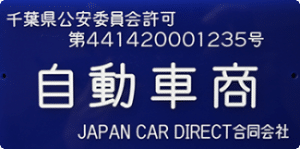
Let JCD take care of all your parts needs. As a licensed dealer we get a discount on new parts at all of the major manufacturers. We also have an excellent relationship with the local wrecker. There we can use their Japan wide network and order the exact used or rebuilt part you need. All you need to do is scan and mail, or fax us a copy of your export certificate to assure we get the correct parts for your vehicle. We will then have your part mailed directly to you for a nominal service fee.


LOWER FEES !!


Due to the high yen exchange rate with all other major currencies, JCD has temporarily reduced our service fee. We have cut our fee 80,000 yen to 65,000 yen to give our customers a break from the poor exchange rates. Our service fee per vehicle is further reduced with the number of vehicles per shipment:

1-2 vehicles/shipment = 65,000yen

3-4 vehicles/shipment = 60,000yen

5-7 vehicles/shipment = 55,000yen

8+ vehicles/shipment = 50,000yen


Let us take care of you. We'll work to find the best available vehicles at the very lowest possible price!!